
Rendering your house for Insulation
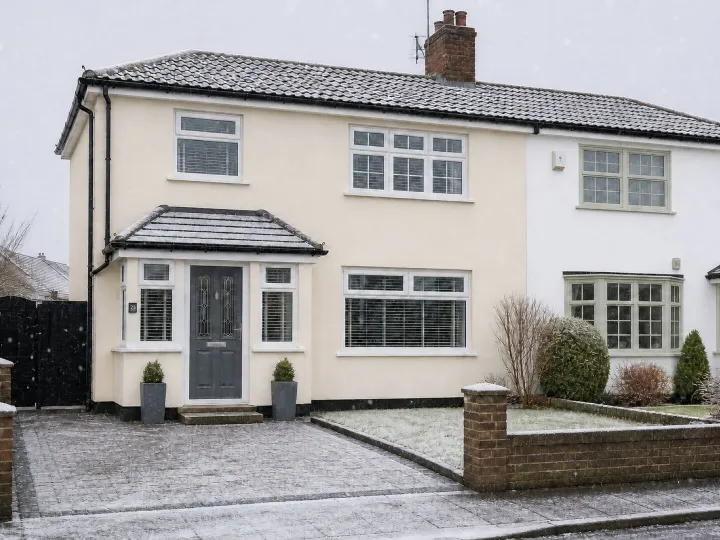
Adding external wall insulation with an insulating render system can really improve comfort and lower running costs in a Yorkshire home, especially if you have cold, solid walls or a worn-out exterior. When installed properly, it acts like a thermal jacket for your house, cutting heat loss through the walls by about a third and saving you hundreds of pounds a year on heating bills.
From our work across Yorkshire, we often see how many homes are exposed to wind, rain, and cold winters. On the moors or by the coast, the wind can be harsh, and even in cities like Sheffield, Rotherham, or Leeds, older terraced and semi-detached houses often feel cold and draughty because heat escapes through uninsulated walls. Government and industry data show that about 30 to 45 per cent of heat loss in poorly insulated houses occurs through external walls, which is why improving wall insulation can make a big difference to your bills.
Many Yorkshire homes were built before cavity insulation became standard, so they have solid brick or stone walls that conduct heat straight outdoors. In our surveys, we often find that even when lofts have been topped up and new boilers fitted, the living room still feels chilly because the walls themselves are cold, creating condensation, cold spots behind furniture and that familiar “radiator on but still not cosy” feeling. That is where insulating render and external wall insulation really start to earn their keep.
What insulating render and EWI actually are
External wall insulation, or EWI, means attaching rigid insulation boards to the outside of your walls, then covering them with a strong basecoat and a decorative, weatherproof render. The render you see from the street is just the outer layer of a system that typically includes insulation such as expanded polystyrene, mineral wool, or phenolic foam, along with mesh reinforcement for added strength and impact resistance.
When we mention “insulating render” to clients, we usually mean the whole system, not just a special type of render by itself. The important thing is that the render and insulation work together to form a continuous thermal layer, eliminating many cold spots that can occur with internal insulation or uneven cavity fill. Once the system is installed and finished in your chosen colour, your home just looks newly rendered, but underneath it is much warmer and more energy-efficient.
How EWI cuts your energy bills
In our experience, the biggest change homeowners notice after EWI is not just lower bills but how different the house feels day to day. Because the walls are no longer acting like radiators to the street, the rooms warm up faster and stay warm for longer once the heating goes off. Research and guidance from organisations such as the Energy Saving Trust indicate that properly insulating solid external walls can reduce heat loss by around 33 to 35 per cent, which translates into very real savings in gas or electricity use.
Some detailed case studies of homes with solid walls have shown that wall insulation alone can reduce fuel bills by about 10 to 30 per cent, depending on the property and the extent of wall area treated. One industry analysis even suggests that external wall insulation can cut heating bills by up to 40 per cent in homes with very leaky, uninsulated walls, though most households see a smaller reduction. In real terms, this usually means saving about £200 to £700 a year for a typical UK home, with three-bedroom semis at the higher end if they start with poor insulation.
Why EWI suits Yorkshire’s climate
Yorkshire's weather patterns are a strong argument for external insulation. We work on homes that face driving rain off the North Sea, persistent damp in low-lying areas and sharp frosts on higher ground, all of which put a lot of stress on masonry and traditional render. By moving the main insulating layer to the outside, EWI keeps the structure itself warmer and drier, which helps reduce condensation, mould growth and frost damage over the long term.
Another aspect that matters in this region is comfort during heatwaves, which are becoming more common. A well-designed EWI system not only keeps heat in during winter but also slows heat from penetrating indoors during hot spells, giving you cooler, more stable internal temperatures in summer. Clients often tell us that after external insulation, they can sit comfortably in rooms that used to feel like freezers in February and ovens in August, without running heating or fans nearly as hard.
Costs, payback and Yorkshire grants
Whenever we assess a property, we discuss costs openly because EWI is a significant investment, even though it delivers long-term value. External wall insulation typically costs between £90 and £130 per square metre for supply and installation, depending on insulation type, render finish, access and location. For a typical house, that often adds up to a total project cost between about £9,000 and £20,000 before any financial support, again depending heavily on size and complexity.
From a payback perspective, those same sources indicate that, without grants, most households recoup the investment through energy savings over roughly 10 to 15 years, sometimes sooner in very inefficient homes where fuel use has been high. In Yorkshire, many of our clients benefit from national schemes such as ECO4 and the Great British Insulation Scheme, as well as regional programmes targeting less efficient homes, which can reduce the upfront cost by 40 to 100 per cent for eligible households. That funding can bring the payback period down to as little as around five years, or even less when contributions are large, which is why we always check grant eligibility early in the process.
Visual impact and practical benefits
One advantage we have found particularly attractive for Yorkshire homeowners is that EWI gives you an energy upgrade and a facelift in one go. Because the insulation is finished with a new render coat, you can transform tired brick, patchy old render or mismatched extensions into a clean, unified façade in a colour and texture that suits the local area. Modern insulating render systems can be finished with silicone or acrylic top coats that are highly weather-resistant and help keep façades cleaner for longer, which is useful in urban areas such as Sheffield, where pollution and algal staining are common.
There are also some subtle practical gains. External wall insulation does not steal valuable floor space, which is a real concern in smaller terraces or cottages where every centimetre counts, and it can be installed with minimal disruption inside your home because most of the work happens outdoors. By keeping the wall construction warmer, EWI can also help reduce the risk of interstitial condensation and damp within the structure, which in turn can support better indoor air quality and reduce mould-related issues that we too often see in hard-working Yorkshire homes.
Is insulating render right for your home?
For us, the best projects are the ones where the solution fits the house and the people living in it. External wall insulation with an insulating render finish tends to deliver the strongest benefits on older solid-walled properties, hard-to-treat homes without cavities and houses in particularly exposed parts of Yorkshire. It can also be an excellent choice if your existing render is failing, since you can address both the structural and energy issues in a single, carefully designed package rather than paying twice for separate repairs and upgrades.
If your walls already have good cavity insulation, or you are planning major internal refurbishments, it may be that internal insulation or other measures provide better value, which is why we always start with a whole-house view rather than pushing one product. Our experience across the region, backed up by independent research, is that for many cold, solid-walled Yorkshire homes, external wall insulation is the single most effective step you can take to reduce energy use, lift your EPC rating and make the house genuinely comfortable in all seasons.
Bringing the benefits home in Yorkshire
When we step back and look at the results on completed projects, the pattern is clear. Properly designed and installed external wall insulation, finished with a quality insulating render system, can significantly reduce heat loss through walls, cut typical heating bills by several hundred pounds a year and transform the feel of a Yorkshire home, especially where solid walls and harsh weather have been a long-term problem. Homeowners report warmer rooms, fewer draughts and less condensation, while also enjoying a fresh new façade that often increases kerb appeal and, in many cases, property value.
If you are in Yorkshire and your home feels cold or is expensive to heat, book a professional survey with http://local.2177813 (Render Plaster UK) today to assess your walls, insulation, and grant eligibility. By acting now, you can quickly turn a hard-to-heat house into a warm, efficient home with external wall insulation and insulating render.
Learn More
Elevate Your Space, Exceeding Expectations – Render Plaster UK: Where Precision Meets Excellence in Rendering and Plastering Services.
